First Reading: Deuteronomy 8: 2-3, 14b-16a/ Responsorial Psalm: Psalms 147: 12-13, 14-15, 19-20/ Second Reading: First Corinthians 10: 16-17/ Alleluia: John 6: 51/ Gospel: John 6: 51-58
7th June 2026 - The Most Holy Body and Blood of Christ (Corpus Christi) Solemnity
Theme: Three Cs of the Eucharist
- June 7, 2026
- 5:14 am
Dear Brothers and Sisters in Christ,
One of the greatest dangers in our spiritual life is becoming familiar with something so extraordinary that we stop being amazed by it. The Feast of Corpus Christi is God’s invitation to recover our sense of wonder.
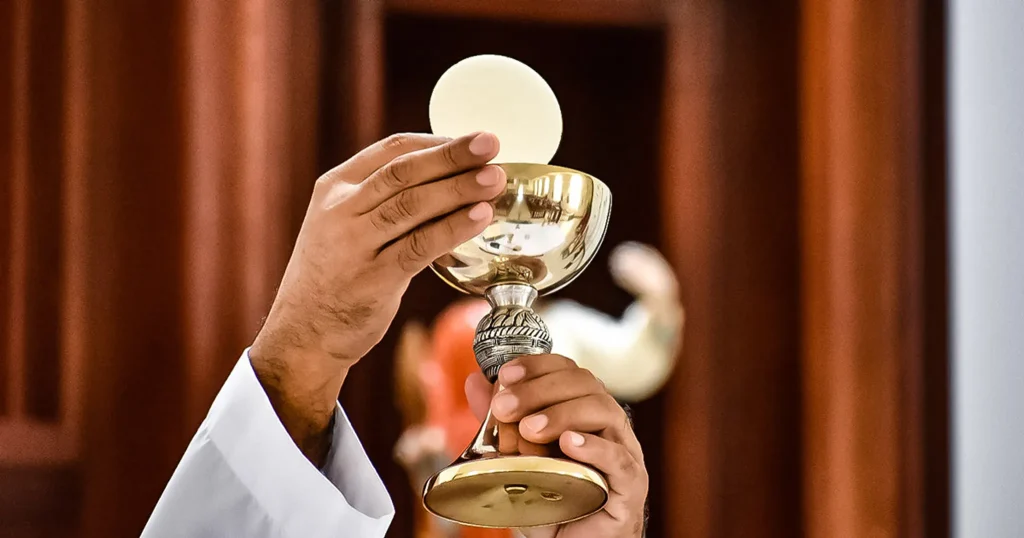
In today’s Gospel, Jesus says: “I am the living bread that came down from heaven… Whoever eats my flesh and drinks my blood has eternal life.” Jesus does not say this symbolically. He says it repeatedly and deliberately. He gives us not merely a reminder of Himself, but Himself. The Eucharist is not simply something we receive. It is Someone we receive.
And today’s readings invite us to reflect on the Three Cs of the Eucharist: Communion, Commitment, and Connection.
1. Communion with Christ
Jesus says, “Whoever eats my flesh and drinks my blood remains in me and I in him.” Notice the intimacy of those words. Every other meal becomes part of us. But in the Eucharist, something extraordinary happens: we become more deeply united to Christ.
The Eucharist is not a reward for good people. It is food for pilgrims. It is strength for the weak. It is Christ giving Himself completely to us. Communion is not primarily about receiving a thing; it is about entering a relationship. Every Eucharist is Jesus saying once again, “I want to remain with you.”
2. Commitment to Christ
Real communion always leads to commitment. When two people stand before the altar on their wedding day, they don’t simply express affection. They make a commitment. Likewise, when we receive Holy Communion, we are saying “Amen.” That little word means much more than “I agree.” It means: “Yes, Lord. I belong to You.” We cannot receive the Body of Christ on Sunday and then live as if Christ has no claim on our Monday.
The Eucharist calls us to conversion. It challenges us to forgive when it is difficult, to love when it is costly, and to remain faithful when it is inconvenient. The Eucharist is not only nourishment; it is a mission. Every Communion asks the same question: “Will you become what you receive?”
3. Connection to the Church
In the second reading, St. Paul writes: “Because the loaf of bread is one, we, though many, are one body.” The Eucharist not only unites us to Christ; it unites us to one another.
We live in a world that is increasingly divided – by politics, culture, generations, opinions, and personal preferences. Yet every Mass gathers people who would not normally choose each other. Every mass welcomes the young and old, rich and poor, different cultures and backgrounds. And Christ makes us one.
The Eucharist reminds us that Christianity is not a private relationship with Jesus. It is a relationship with Jesus that brings us into His Body, the Church. We kneel together. We pray together. We receive the same Lord. We become one family around one altar.That is why division, gossip, resentment, and indifference wound the Body of Christ. We cannot truly receive Christ’s Body while ignoring the members of His Body.
The greatest miracle at every Mass is not that bread becomes the Body of Christ. The greatest miracle is that ordinary people like us are slowly transformed into the Body of Christ. And that transformation begins every time we come forward and say one simple word: “Amen.”
Prayer: Lord Jesus, You are the Living Bread come down from heaven. Deepen my communion with You, strengthen my commitment to follow You, and increase my love for Your Church. May every Eucharist transform my heart, so that I may become what I receive: Your presence in the world. Amen.
– Homily by Rev Fr Patrick Agbeko